Travel Insurance Coverage Explained for International Trips
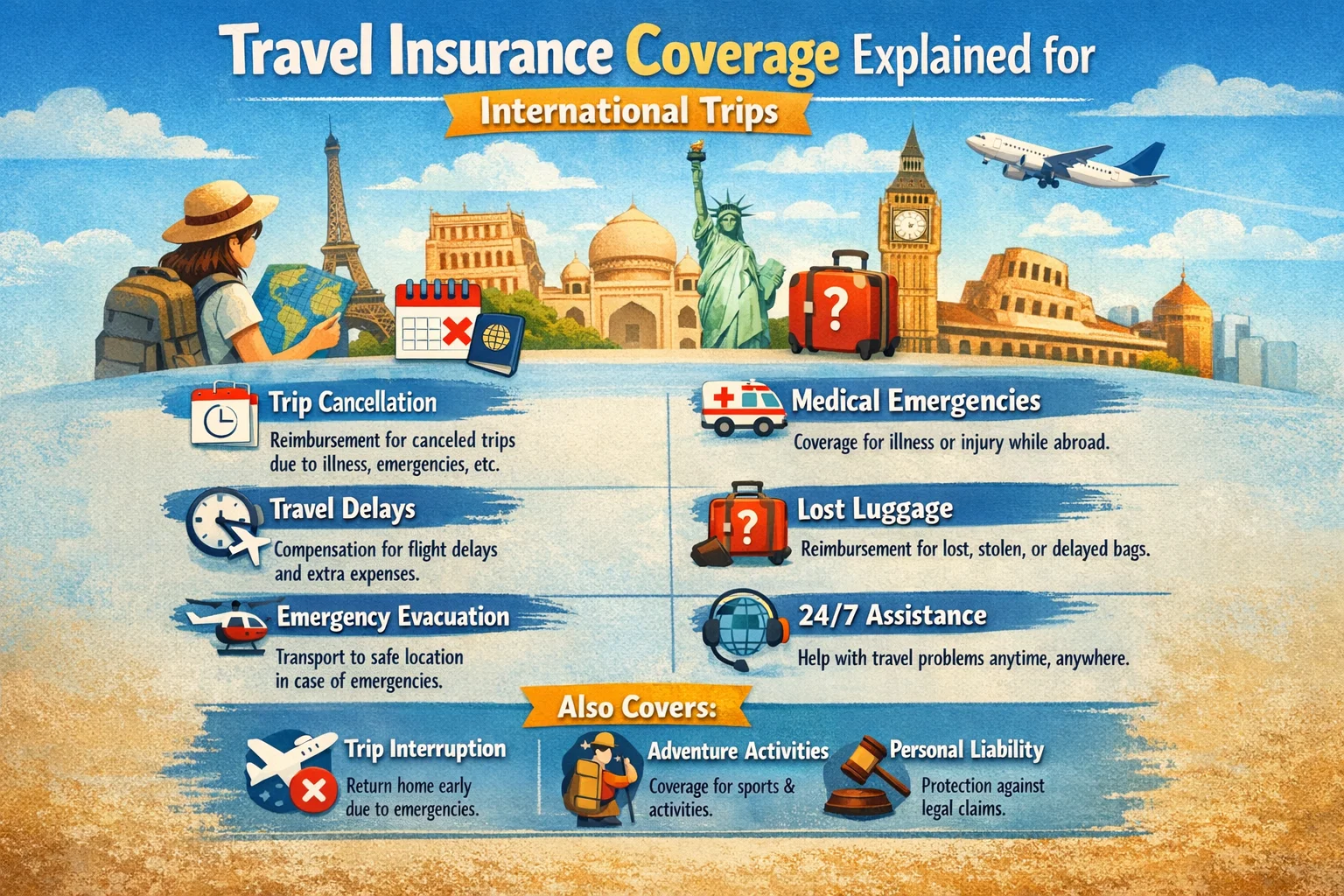
Travel Insurance Coverage Explained for International Trips
International travel offers unforgettable experiences, but it also comes with financial risks. From unexpected medical emergencies to flight cancellations, lost baggage, and political or weather-related disruptions, travelers face uncertainties that can result in significant expenses.
This is where travel insurance coverage becomes essential. For travelers from Tier-1 countries such as the United States, United Kingdom, Canada, Australia, and Europe, international travel insurance is no longer optional—it is a smart financial decision.
In this comprehensive guide, we explain exactly what travel insurance covers for international trips, how each coverage type works, what is excluded, and how to choose the best policy for maximum protection.
What Is International Travel Insurance?
International travel insurance is a policy designed to protect travelers against financial losses that may occur before or during a trip outside their home country.
Unlike domestic insurance, international travel insurance focuses on risks unique to overseas travel, such as foreign medical systems, emergency evacuation, international flight disruptions, and cross-border legal requirements.
Why Travel Insurance Coverage Is Critical for International Trips
Many travelers assume their domestic health insurance will cover them abroad. In reality, most health plans offer limited or no coverage outside the home country.
In countries like the United States, a single emergency medical visit can cost tens of thousands. In remote or developing regions, emergency evacuation alone can exceed six figures.
Core Travel Insurance Coverage Types Explained
1. Emergency Medical Coverage
Emergency medical coverage is the most important component of international travel insurance. It covers medical expenses incurred due to illness or injury while traveling abroad.
- Hospitalization and surgery
- Doctor consultations
- Prescription medications
- Emergency dental treatment
High-quality policies provide coverage limits suitable for Tier-1 destinations where healthcare costs are extremely high.
2. Emergency Medical Evacuation and Repatriation
If you suffer a serious medical condition and local facilities cannot provide adequate care, emergency evacuation coverage pays for transportation to the nearest appropriate medical facility.
Repatriation coverage ensures you can be safely returned to your home country if medically necessary.
Without insurance, evacuation costs can range from $50,000 to over $200,000.
3. Trip Cancellation Coverage
Trip cancellation insurance reimburses prepaid, non-refundable travel expenses if you must cancel your trip due to covered reasons.
- Serious illness or injury
- Death of a close family member
- Natural disasters
- Government travel advisories
4. Trip Interruption Coverage
If your trip is cut short due to an emergency, trip interruption coverage pays for unused portions of your trip and additional transportation costs.
5. Trip Delay Coverage
International flights are more prone to delays due to weather, airline issues, and air traffic congestion.
Trip delay coverage reimburses expenses such as:
- Hotel accommodations
- Meals
- Local transportation
6. Baggage Loss, Theft, or Delay
Baggage coverage protects against lost, stolen, or delayed luggage. Airlines often have limited liability, especially for international routes.
Travel insurance helps replace essential items such as clothing, electronics, and travel documents.
Optional Travel Insurance Add-Ons
Cancel For Any Reason (CFAR)
CFAR coverage allows you to cancel your trip for almost any reason and receive partial reimbursement. This option is popular among travelers seeking maximum flexibility.
Adventure Sports Coverage
Standard policies may exclude high-risk activities. Adventure add-ons cover activities like skiing, scuba diving, trekking, and mountain climbing.
What Travel Insurance Typically Does NOT Cover
- Pre-existing conditions (without waiver)
- Non-essential cosmetic procedures
- Losses due to intoxication
- Illegal activities
- Undeclared high-risk activities
International Travel Insurance Coverage Comparison
| Coverage Type | Why It Matters |
|---|---|
| Medical Expenses | Protects against high overseas healthcare costs |
| Medical Evacuation | Covers expensive emergency transport |
| Trip Cancellation | Reimburses non-refundable bookings |
| Trip Interruption | Protects against early trip termination |
| Baggage Coverage | Compensates for lost or delayed luggage |
How Much Travel Insurance Coverage Do You Need?
Coverage needs vary depending on destination, trip cost, duration, and traveler age. For Tier-1 countries, higher medical and evacuation limits are strongly recommended.
Always prioritize medical coverage over trip cost when selecting a policy.
How to Choose the Best Travel Insurance Coverage
- Compare coverage limits, not just price
- Check emergency medical maximums
- Review exclusions carefully
- Ensure 24/7 global assistance
- Choose reputable international insurers
Final Thoughts on International Travel Insurance Coverage
Travel insurance coverage for international trips is not just about convenience—it is essential financial protection.
With rising healthcare costs, frequent travel disruptions, and unpredictable global conditions, comprehensive travel insurance provides peace of mind and safeguards your finances wherever you go.
Whether you are traveling for business, leisure, or family reasons, the right travel insurance coverage ensures you are protected against the unexpected.
Comments (3)