Common Myths About AI Tools Explained
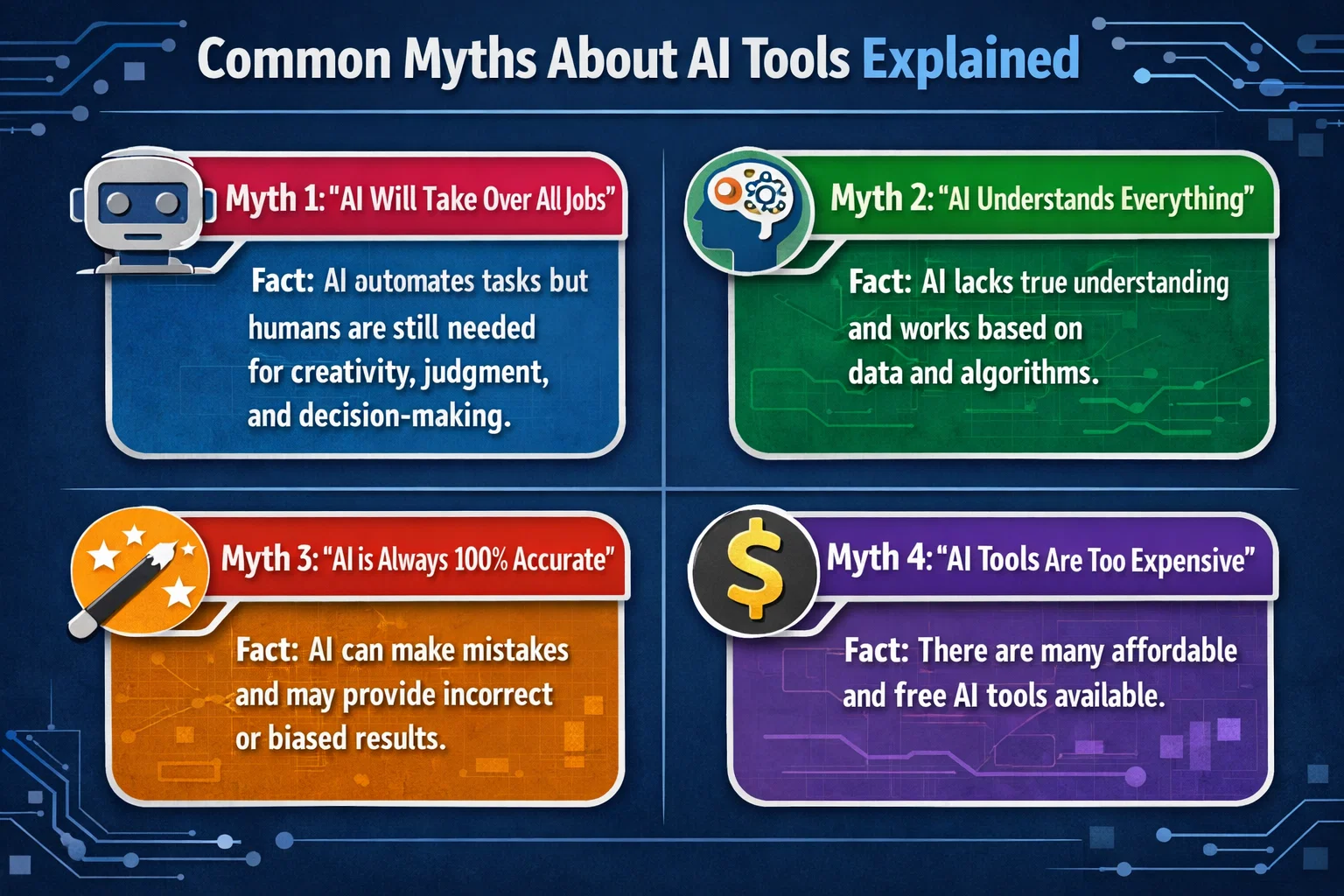
Common Myths About AI Tools Explained
Artificial Intelligence (AI) tools have rapidly become one of the most discussed technologies in the world. From enterprise automation and cybersecurity to marketing, finance, and SaaS platforms, AI tools are everywhere. Yet, despite massive global adoption—especially in Tier 1 countries like the United States, Canada, the UK, Australia, and Germany—many misconceptions continue to surround AI tools.
These myths often prevent businesses from adopting AI-driven solutions that could significantly improve efficiency, reduce operational costs, and increase revenue. In this detailed guide, we will break down the most common myths about AI tools, explain the reality behind them, and show how modern businesses actually use AI software today.
Why AI Tools Matter for Modern Businesses
AI tools are no longer experimental technologies reserved for large tech giants. Today, AI-powered software solutions are embedded in CRM systems, project management platforms, email marketing tools, cybersecurity solutions, cloud infrastructure, and even financial planning software.
High-value industries such as finance, insurance, healthcare, SaaS, cloud computing, and enterprise software heavily invest in AI tools. These industries also attract some of the highest eCPM and CPC rates in digital advertising, making AI-related content extremely valuable for publishers and advertisers alike.
Myth 1: AI Tools Will Replace All Human Jobs
One of the biggest myths about AI tools is that they will completely replace human jobs. While AI can automate repetitive and data-heavy tasks, it does not eliminate the need for human intelligence, creativity, and decision-making.
In reality, AI tools are designed to assist professionals rather than replace them. For example:
- AI-powered CRM tools help sales teams prioritize leads.
- AI writing assistants support content creators with research and drafts.
- AI analytics platforms help executives make data-driven decisions.
Businesses in Tier 1 markets invest heavily in AI tools to improve workforce productivity, not eliminate jobs. This is why enterprise AI solutions command premium pricing and high advertising demand.
Myth 2: AI Tools Are Only for Large Enterprises
Another common misconception is that AI tools are only affordable and useful for large corporations. While enterprise-level AI solutions do exist, many SaaS-based AI tools are designed specifically for startups, small businesses, and mid-sized companies.
Cloud-based AI tools operate on subscription models, making them accessible to businesses of all sizes. Examples include:
- AI-powered email marketing platforms
- Customer support chatbots
- AI-based accounting and finance tools
- Project management software with AI automation
These tools are widely adopted in the US, UK, and Europe, where SaaS adoption rates are among the highest in the world.
Myth 3: AI Tools Are Too Expensive
Cost is often cited as a major barrier to AI adoption. However, modern AI tools are more cost-effective than ever. Cloud infrastructure and SaaS pricing models allow businesses to pay only for what they use.
When compared to the cost of manual labor, errors, and inefficiencies, AI tools often deliver a strong return on investment (ROI). This is particularly true in industries like finance, insurance, cybersecurity, and enterprise software.
| Business Function | Traditional Cost | AI Tool Cost | Efficiency Gain |
|---|---|---|---|
| Customer Support | High staffing costs | Low monthly SaaS fee | 24/7 automation |
| Marketing Analytics | Manual analysis | AI-driven insights | Faster decisions |
| Fraud Detection | Reactive monitoring | AI real-time detection | Risk reduction |
Myth 4: AI Tools Are Not Secure
Security concerns are common when businesses consider AI adoption. However, leading AI tools—especially those targeting enterprise and finance sectors—are built with advanced cybersecurity frameworks.
Many AI platforms comply with international standards such as:
- GDPR (Europe)
- SOC 2 compliance
- ISO 27001
- HIPAA (Healthcare)
In fact, AI is increasingly used to enhance cybersecurity by detecting threats, preventing fraud, and identifying vulnerabilities faster than traditional systems.
Myth 5: AI Tools Require Advanced Technical Skills
Early AI systems required specialized expertise, but modern AI tools are designed for non-technical users. User-friendly dashboards, automation workflows, and no-code interfaces make AI tools accessible to business users, marketers, HR teams, and finance professionals.
This ease of use has driven massive adoption in SaaS platforms, making AI tools one of the fastest-growing software categories globally.
Real-World Use Cases of AI Tools
Businesses across industries use AI tools in practical, revenue-generating ways:
- Predictive analytics for financial forecasting
- AI chatbots for customer engagement
- Automated ad optimization in digital marketing
- AI-driven CRM lead scoring
- Fraud detection in banking and insurance
Why AI Tools Attract High eCPM and CPC Ads
AI-related keywords are among the highest-paying in digital advertising. Advertisers in finance, SaaS, cloud services, cybersecurity, and enterprise software aggressively bid on AI-related traffic.
Tier 1 countries generate premium ad demand because businesses in these regions have higher budgets and longer customer lifetime values (LTV).
This makes AI tools content extremely valuable for publishers aiming to maximize ad revenue and match rates.
Final Thoughts
AI tools are not mysterious, dangerous, or inaccessible technologies. Most of the common myths surrounding AI tools are outdated and misleading. In reality, AI software is practical, secure, affordable, and widely used by businesses of all sizes.
As AI adoption continues to grow globally, understanding the truth behind these myths will help businesses, marketers, and decision-makers stay competitive in an increasingly digital economy.
Comments (3)