Email Marketing Automation Explained for Beginners
Email Marketing Automation Explained for Beginners
Email marketing automation has become one of the highest ROI digital marketing strategies for businesses targeting Tier-1 countries like the United States, United Kingdom, Canada, and Australia. With rising advertising costs, automation helps brands reduce CPA, increase customer lifetime value (LTV), and drive predictable revenue at scale.
This beginner-friendly yet in-depth guide explains what email marketing automation is, how it works, why it matters, and how modern businesses use AI-powered email automation tools to generate consistent conversions.
What Is Email Marketing Automation?
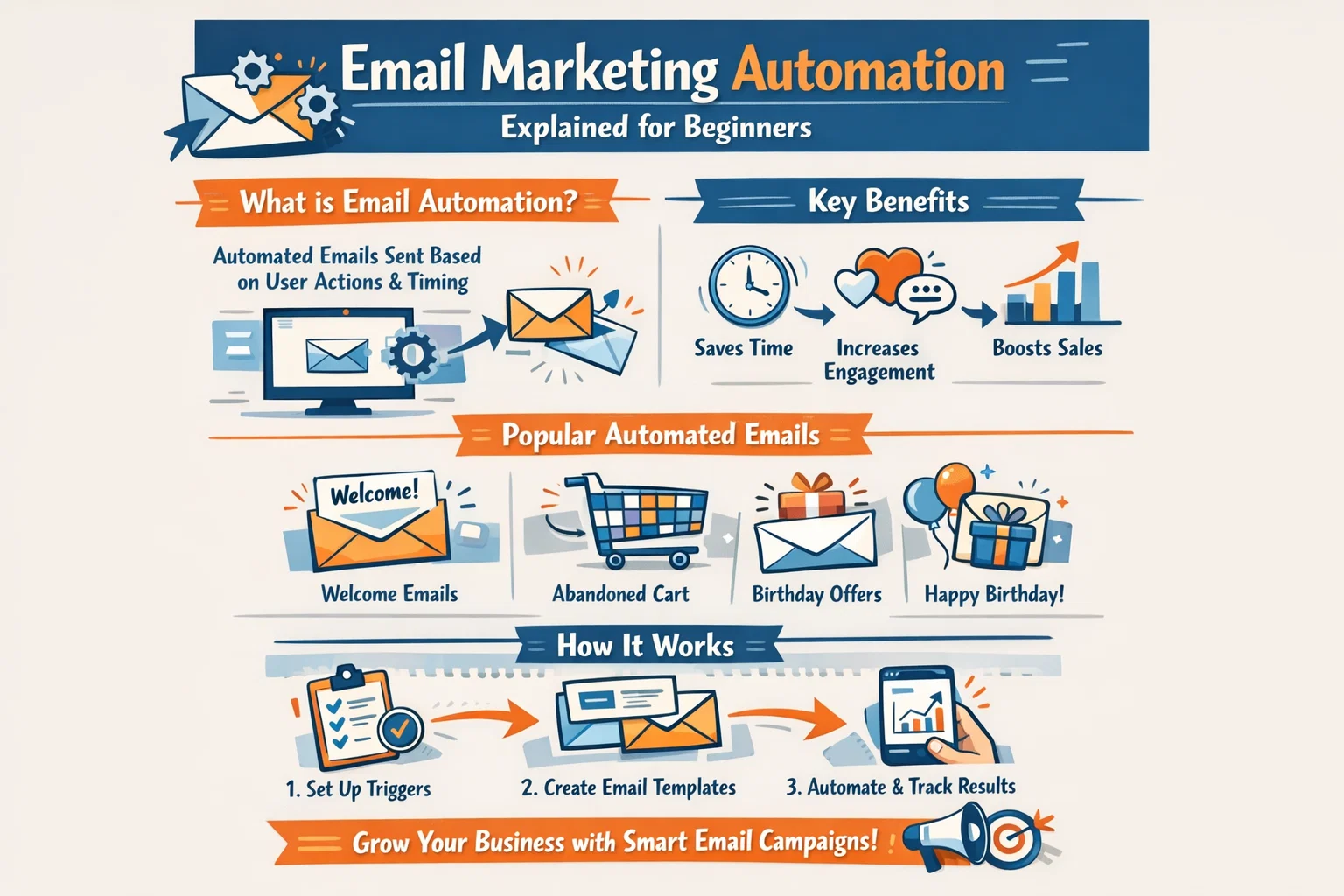
Email marketing automation is the process of sending targeted, personalized emails to users automatically based on predefined triggers, behaviors, or schedules—without manual intervention.
Instead of sending one-off bulk emails, automation allows marketers to build intelligent workflows that react to user actions such as:
- Signing up for a newsletter
- Abandoning a shopping cart
- Making a purchase
- Clicking a specific email link
- Becoming inactive over time
These workflows are powered by advanced email automation software that integrates customer data, analytics, AI, and CRM systems.
Why Email Marketing Automation Matters in 2026
In competitive Tier-1 markets, automation is no longer optional. Rising CPC on Google Ads, Meta Ads, and LinkedIn Ads has made owned channels like email extremely valuable.
Key Benefits:
- Higher ROI: Email automation delivers up to 42x ROI compared to paid ads
- Lower CAC: Reduces dependency on expensive ad platforms
- Personalization at Scale: AI-driven dynamic content
- Better Deliverability: Behavior-based engagement improves inbox placement
- 24/7 Revenue Engine: Emails convert even while you sleep
How Email Marketing Automation Works
Email automation follows a simple but powerful structure:
- Trigger: User action or event
- Condition: Rules that segment users
- Action: Automated email or sequence
| Trigger | Email Sent | Goal |
|---|---|---|
| New Signup | Welcome Email Series | User Activation |
| Cart Abandonment | Reminder + Discount | Recover Revenue |
| Purchase Completed | Upsell / Cross-sell | Increase AOV |
| No Activity (30 days) | Re-engagement Campaign | Reduce Churn |
Types of Automated Email Campaigns
1. Welcome Email Automation
Welcome emails generate some of the highest open rates (50%+). Automation ensures every new subscriber receives onboarding emails that introduce your brand, value proposition, and offers.
2. Drip Campaigns
Drip email automation sends educational or promotional emails over time, nurturing leads until they are sales-ready.
3. Transactional Email Automation
Order confirmations, invoices, password resets, and shipping updates are automated transactional emails with extremely high engagement and CPC value.
4. Behavioral Email Automation
Triggered by user behavior, these emails are hyper-personalized and perform exceptionally well in Tier-1 markets.
Best Email Marketing Automation Software (High CPC)
The following platforms dominate high-value markets due to advanced AI, CRM integration, and compliance support:
- HubSpot Marketing Hub
- ActiveCampaign
- Klaviyo (Ecommerce)
- Mailchimp Automation
- Salesforce Marketing Cloud
- Marketo Engage
AI and Machine Learning in Email Automation
Modern email automation software uses AI to:
- Optimize send times
- Predict customer behavior
- Personalize subject lines
- Recommend products dynamically
- Increase open and click-through rates
AI-driven automation significantly improves revenue per subscriber, especially in SaaS and ecommerce industries.
Email Automation for Ecommerce Businesses
Email automation is one of the highest-earning channels for ecommerce brands targeting US, UK, and EU customers.
High-Converting Ecommerce Automations:
- Abandoned cart recovery
- Browse abandonment
- Post-purchase upsells
- VIP loyalty flows
- Back-in-stock alerts
Email Marketing Automation for SaaS Companies
SaaS businesses rely heavily on automation for onboarding, activation, and retention.
Common SaaS email workflows include:
- Free trial onboarding
- Feature adoption emails
- Usage-based alerts
- Upgrade and renewal reminders
- Churn prevention campaigns
Compliance and Deliverability Best Practices
To maintain high inbox placement in Tier-1 countries, email automation must follow strict compliance rules:
- GDPR (EU & UK)
- CAN-SPAM (USA)
- CASL (Canada)
- Double opt-in verification
- Easy unsubscribe options
How to Get Started with Email Marketing Automation
- Choose a high-quality email automation platform
- Segment your audience properly
- Create conversion-focused email templates
- Set up core automation workflows
- Track performance and optimize continuously
Final Thoughts
Email marketing automation is one of the most profitable digital marketing investments for beginners and advanced marketers alike. With AI-powered personalization, behavior-based triggers, and high-value commercial intent, automated email campaigns consistently outperform paid ads in Tier-1 markets.
If you want scalable revenue, lower acquisition costs, and long-term customer relationships, mastering email marketing automation is no longer optional—it’s essential.
Comments (3)