Cybersecurity Basics: How to Protect Your Digital Data
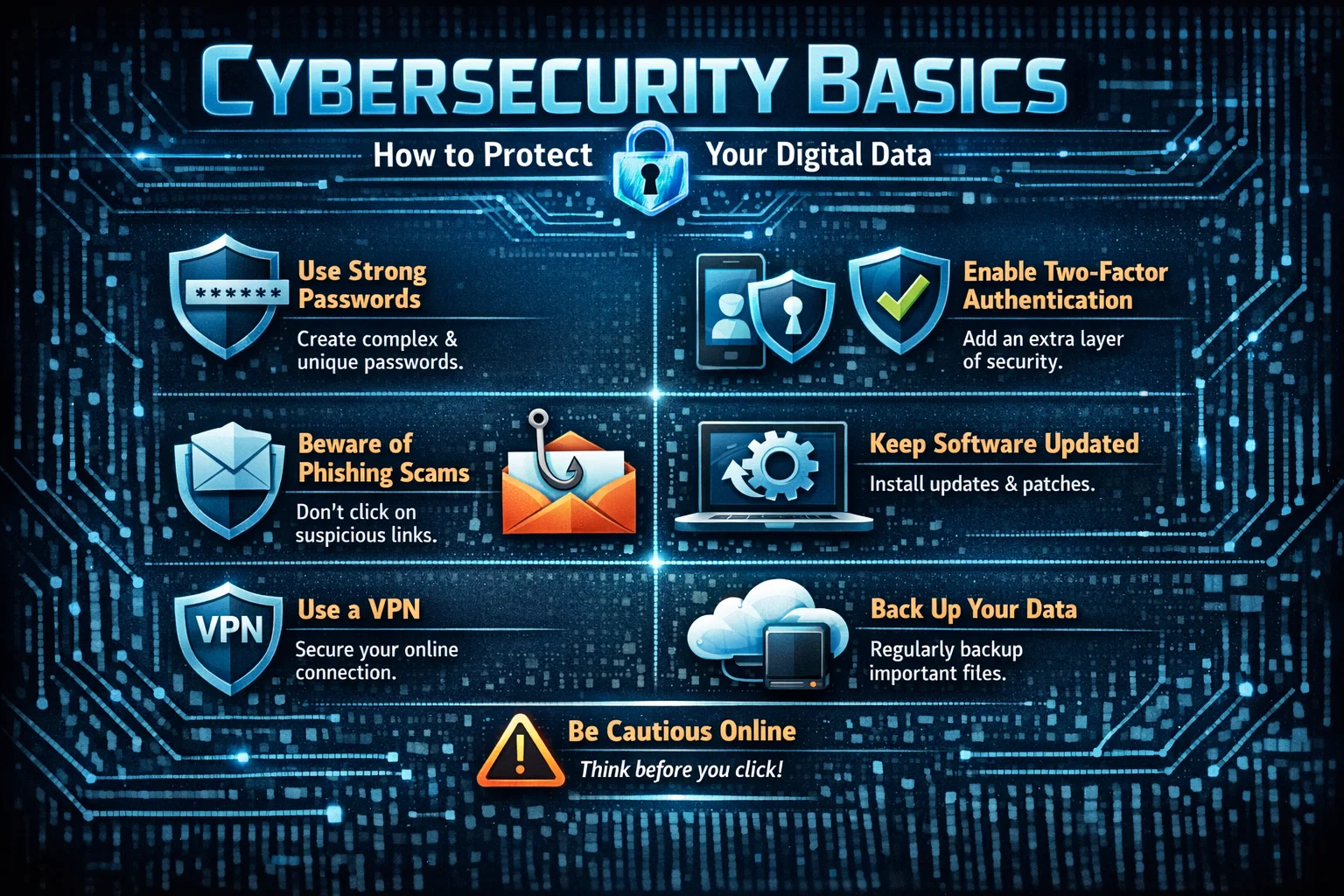
Cybersecurity Basics: How to Protect Your Digital Data
In today’s hyper-connected digital world, cybersecurity is no longer optional—it is a necessity. From personal smartphones to enterprise cloud infrastructures, digital data is constantly under threat from cybercriminals. Understanding cybersecurity basics is the first step toward protecting sensitive information, financial assets, and business operations.
Cybersecurity is a high-value topic across Tier-1 countries such as the United States, United Kingdom, Canada, Australia, and Europe. Industries like finance, SaaS, healthcare, insurance, and e-commerce invest heavily in cybersecurity solutions, making this niche extremely high CPC and eCPM friendly.
What Is Cybersecurity?
Cybersecurity refers to the practice of protecting systems, networks, devices, and data from digital attacks. These attacks are often aimed at accessing, altering, or destroying sensitive information, extorting money, or disrupting normal business operations.
Effective cybersecurity involves a combination of technologies, processes, and user awareness to reduce risk and ensure data integrity.
Why Cybersecurity Matters More Than Ever
As businesses move toward cloud computing, remote work, and digital transactions, the attack surface for cyber threats continues to grow. Data breaches can result in massive financial losses, legal penalties, reputational damage, and operational downtime.
- Rising cybercrime costs globally
- Increased remote workforce vulnerabilities
- Strict data protection regulations
- Growing reliance on digital infrastructure
Types of Cyber Threats You Should Know
Malware
Malware includes viruses, ransomware, spyware, and trojans designed to damage systems or steal data. Ransomware attacks, in particular, have surged in Tier-1 economies.
Phishing Attacks
Phishing involves deceptive emails or messages that trick users into revealing sensitive information such as passwords or financial details.
Man-in-the-Middle Attacks
These attacks intercept communication between two parties, often on unsecured public Wi-Fi networks.
Denial-of-Service (DoS) Attacks
DoS attacks overwhelm systems, causing downtime and service disruption for businesses.
Core Principles of Cybersecurity
| Principle | Description |
|---|---|
| Confidentiality | Ensuring data is accessible only to authorized users |
| Integrity | Protecting data from unauthorized modification |
| Availability | Ensuring systems and data are accessible when needed |
Cybersecurity Basics for Individuals
Personal cybersecurity starts with simple but effective habits that significantly reduce risk.
- Use strong, unique passwords
- Enable multi-factor authentication (MFA)
- Keep software and operating systems updated
- Avoid suspicious emails and links
- Use secure Wi-Fi networks
Cybersecurity Basics for Businesses
Businesses face more complex threats due to larger attack surfaces and valuable data. A proactive cybersecurity strategy is essential for long-term success.
- Implement endpoint protection
- Use enterprise-grade firewalls
- Conduct regular security audits
- Train employees on cybersecurity awareness
- Adopt zero-trust security models
Data Protection and Encryption
Encryption converts data into unreadable formats, ensuring that even if data is intercepted, it cannot be exploited. Encryption is a core requirement for compliance with regulations like GDPR, HIPAA, and SOC 2.
Businesses handling financial, healthcare, or personal data must prioritize encryption both at rest and in transit.
Role of Cloud Security in Modern Cybersecurity
Cloud platforms provide advanced security tools such as automated threat detection, access control, and real-time monitoring. Leading cloud providers invest billions annually in cybersecurity.
Cloud security has become a high-demand service in Tier-1 markets, driving premium advertising rates.
Network Security Fundamentals
Network security focuses on protecting internal networks from unauthorized access and attacks. Firewalls, intrusion detection systems, and VPNs are essential components.
Endpoint Security Explained
Endpoint security protects devices such as laptops, mobile phones, and servers. With remote work becoming mainstream, endpoint security is more critical than ever.
Cybersecurity Compliance and Regulations
Regulatory frameworks enforce strict data protection standards. Non-compliance can result in heavy fines and legal action.
- GDPR (Europe)
- HIPAA (United States)
- CCPA (California)
- ISO 27001
Common Cybersecurity Mistakes to Avoid
- Using weak passwords
- Ignoring software updates
- Lack of employee training
- No backup strategy
- Overlooking mobile security
Future Trends in Cybersecurity
Artificial intelligence, machine learning, and automation are transforming cybersecurity. AI-driven threat detection enables faster response and improved accuracy.
As cyber threats evolve, cybersecurity spending is expected to grow significantly, especially in enterprise and cloud security sectors.
How to Build a Strong Cybersecurity Strategy
A strong cybersecurity strategy combines technology, policies, and human awareness. Continuous monitoring, regular updates, and incident response planning are essential components.
Conclusion
Cybersecurity basics form the foundation of digital safety in an increasingly connected world. Whether you are an individual protecting personal data or a business safeguarding customer information, understanding and implementing cybersecurity best practices is critical.
As cyber threats grow more sophisticated, investing in cybersecurity knowledge and solutions is one of the smartest decisions you can make for long-term digital resilience.
Comments (3)